
“Every great dream begins with a dreamer.” – Harriet Tubman
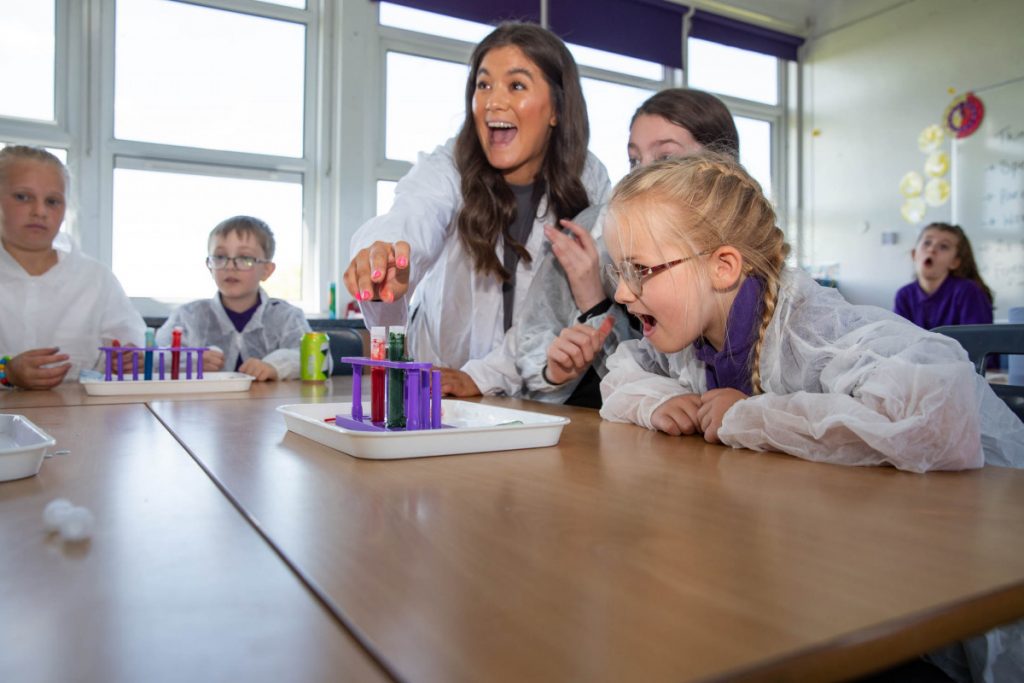
At Kader Academy, our vision for science education is to ignite a lifelong passion for discovery and exploration in every child. We believe that science is a gateway to understanding the world around us and that every student has the potential to be a scientist.
Aims
At Kader Academy, our science curriculum aims to develop curious, confident and knowledgeable learners who have a deep understanding of the world around them. Through a carefully sequenced and ambitious curriculum, pupils build secure knowledge across the key scientific disciplines of biology, chemistry and physics, while also developing their understanding of how science works.
We aim to inspire a sense of wonder and curiosity, encouraging children to ask questions, explore ideas and think critically about the world they live in. Pupils are taught to work scientifically, developing the skills needed to investigate, observe, test and draw conclusions. Through this, we foster ambition, encouraging pupils to aim high, embrace challenge and see future possibilities within science and beyond.
Our curriculum supports pupils to see themselves as scientists, developing a strong sense of identity within the subject. Through meaningful connections to real-world contexts and diverse scientific role models, we promote inclusion and ensure that all pupils feel that science is for them. Ultimately, we aim for every child to leave Kader with the knowledge, skills and confidence to understand and engage with an ever-changing scientific world.
Approach
Carefully Sequenced Curriculum
Our science curriculum is structured to ensure clear progression of knowledge and skills from EYFS to Year 6. Key concepts are revisited and built upon over time, allowing pupils to deepen their understanding and make meaningful connections across topics.
Working Scientifically
Pupils are explicitly taught the disciplinary skills of science, including observing over time, pattern seeking, classifying, comparative and fair testing, and researching using secondary sources. Children are encouraged to take ownership of their learning, approaching investigations with curiosity, independence and determination.
Vocabulary-Rich Learning
A strong emphasis is placed on the explicit teaching of scientific vocabulary. Pupils are taught to use precise language to explain their thinking, supported through high-quality teacher modelling and opportunities for structured talk. Through collaborative discussion, pupils build strong relationships, learning to listen respectfully, challenge ideas and learn from one another.
Practical, Hands-On Experiences
Science is brought to life through engaging, practical investigations that allow pupils to apply their knowledge in meaningful contexts. Children are encouraged to make predictions, test ideas and reflect on their findings, developing resilience and ambition as learners.
Assessment and Retrieval
Teachers use regular formative assessment to check understanding and address misconceptions. Opportunities for retrieval are built into lessons to support long-term retention of key knowledge and concepts, ensuring all pupils are supported to succeed.
Enrichment and Real-World Links
Where possible, learning is enhanced through real-life contexts, educational visits and links to the wider community. Pupils are introduced to a diverse range of scientists, helping them to see themselves reflected in the subject and raising aspirations for future pathways.
DART (Dedicated Active Recall Time)
Dedicated Active Recall Time (DART) is embedded within our science curriculum to ensure pupils revisit and retain key knowledge over time. Through regular retrieval practice, pupils strengthen their understanding, make connections between concepts and address misconceptions. DART is responsive to assessment and supports all pupils to build confidence, resilience and ambition in their learning.
Outcomes
As a result of our ambitious and well-sequenced science curriculum, pupils at Kader Academy develop secure and connected scientific knowledge, alongside a strong understanding of how science works. They are able to recall key concepts and apply their knowledge confidently across different contexts, demonstrating clear progression as they move through the school.
Pupils use scientific vocabulary accurately and articulate their understanding with confidence, reflecting the strong emphasis placed on oracy within the curriculum. They approach investigations with curiosity, independence and determination, showing ambition in their thinking and a willingness to tackle challenge.
Children demonstrate a strong sense of identity as scientists, recognising that science is relevant to their lives and accessible to them. Through collaborative learning and shared enquiry, pupils build positive relationships, valuing each other’s ideas and working together to deepen understanding.
Outcomes in science are strong, with pupils, including those who are disadvantaged and those with additional needs, making good progress from their starting points. By the time they leave Kader Academy, pupils are well-prepared for the next stage of their education, equipped with the knowledge, skills and ambition to continue exploring and understanding the world through a scientific lens.
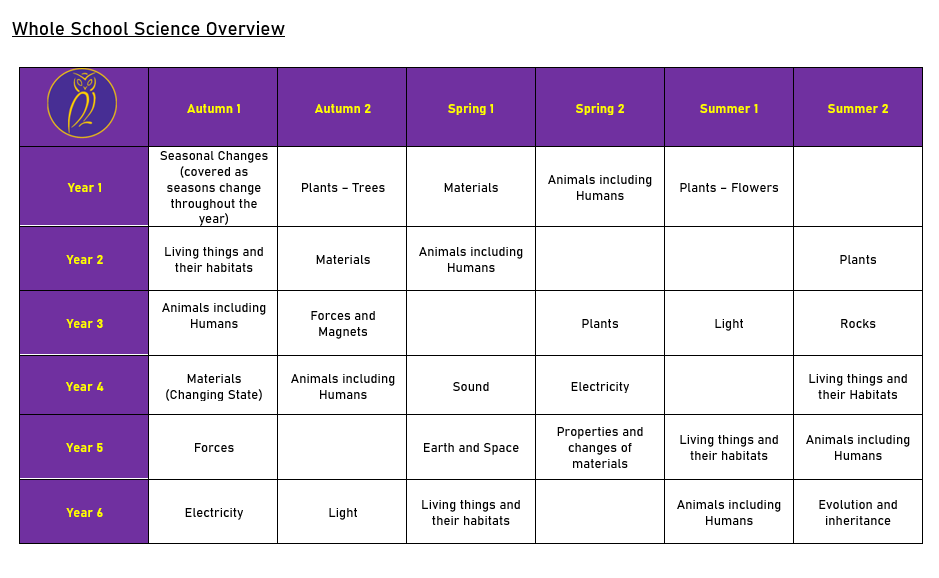
Year group overview:
Useful links:
KS1 Science
https://www.bbc.co.uk/bitesize/subjects/z6svr82
KS2 Science
https://www.bbc.co.uk/bitesize/subjects/z2pfb9q
Maddie Moat
https://www.youtube.com/user/maddiemoate/featured
The popular children’s television presenter has her own YouTube channel and is delivering a daily science lesson “Let’s Go Live with Maddie & Greg”. Her channel has a wealth of educational videos.
The Royal Institution – Science Lives Here – Experimental
https://www.rigb.org/learning/activities-and-resources?type=28
STEM Learning
https://www.stem.org.uk/primary/resources/collections/home-learning-support
Woodland Trust
https://www.woodlandtrust.org.uk/visiting-woods/things-to-do/children-and-families
Science Museum
https://learning.sciencemuseumgroup.org.uk/learning-resources